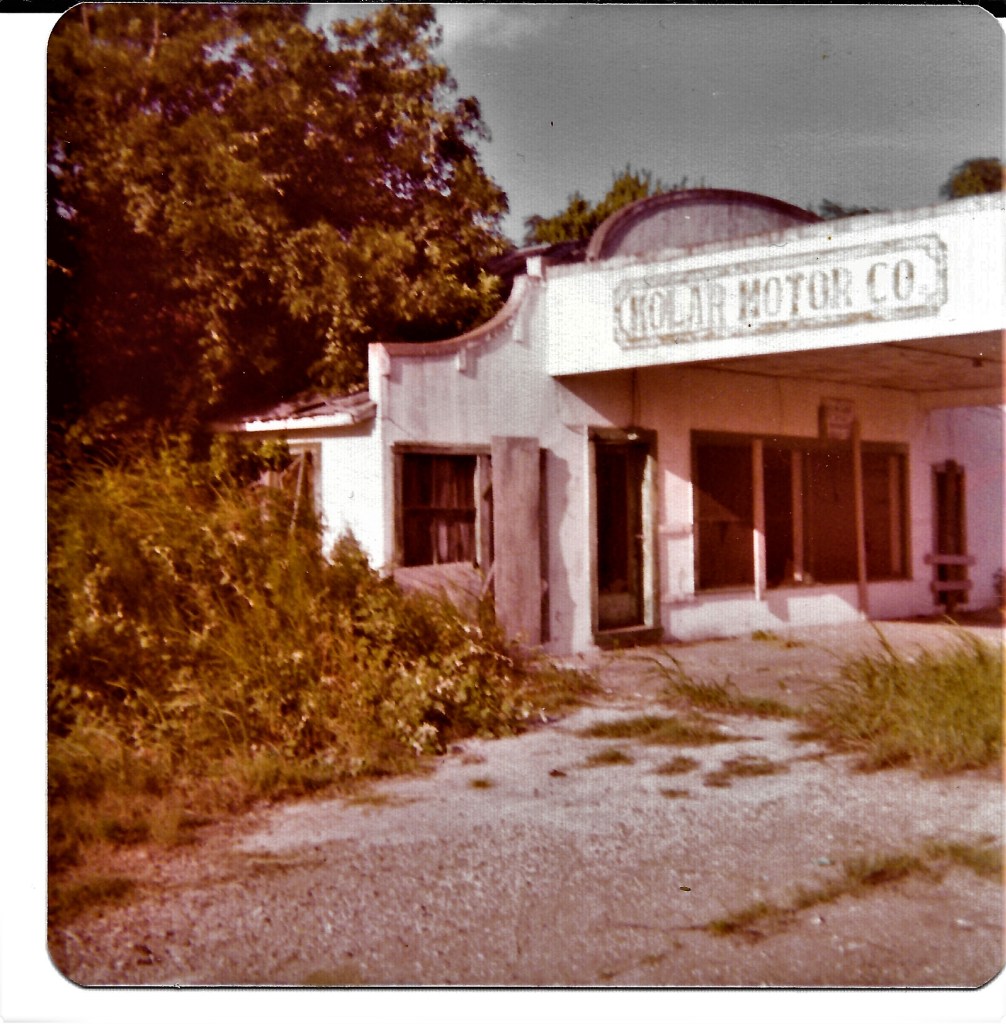
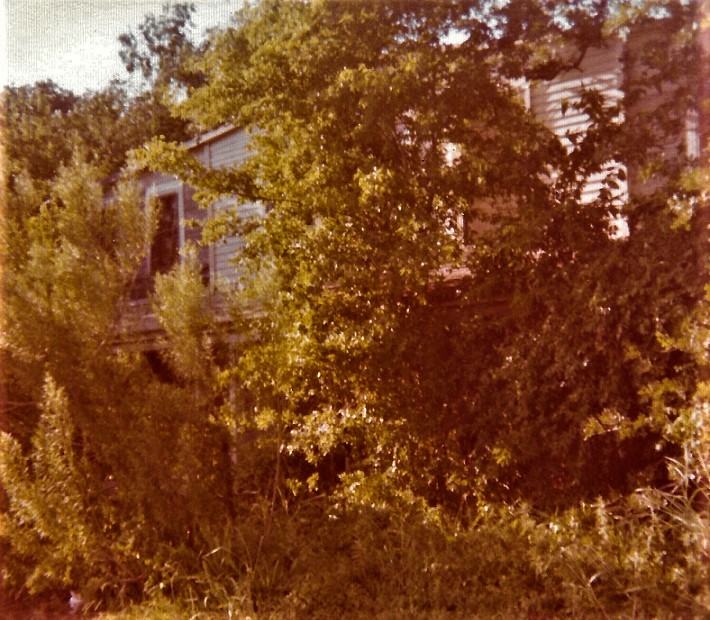
This was my grandfather’s gas station/car sales/repair business that he owned when I was young. I took this picture in 1977 when I went to visit the old homestead in the hope of restoring the old place, 20 years after my childhood.
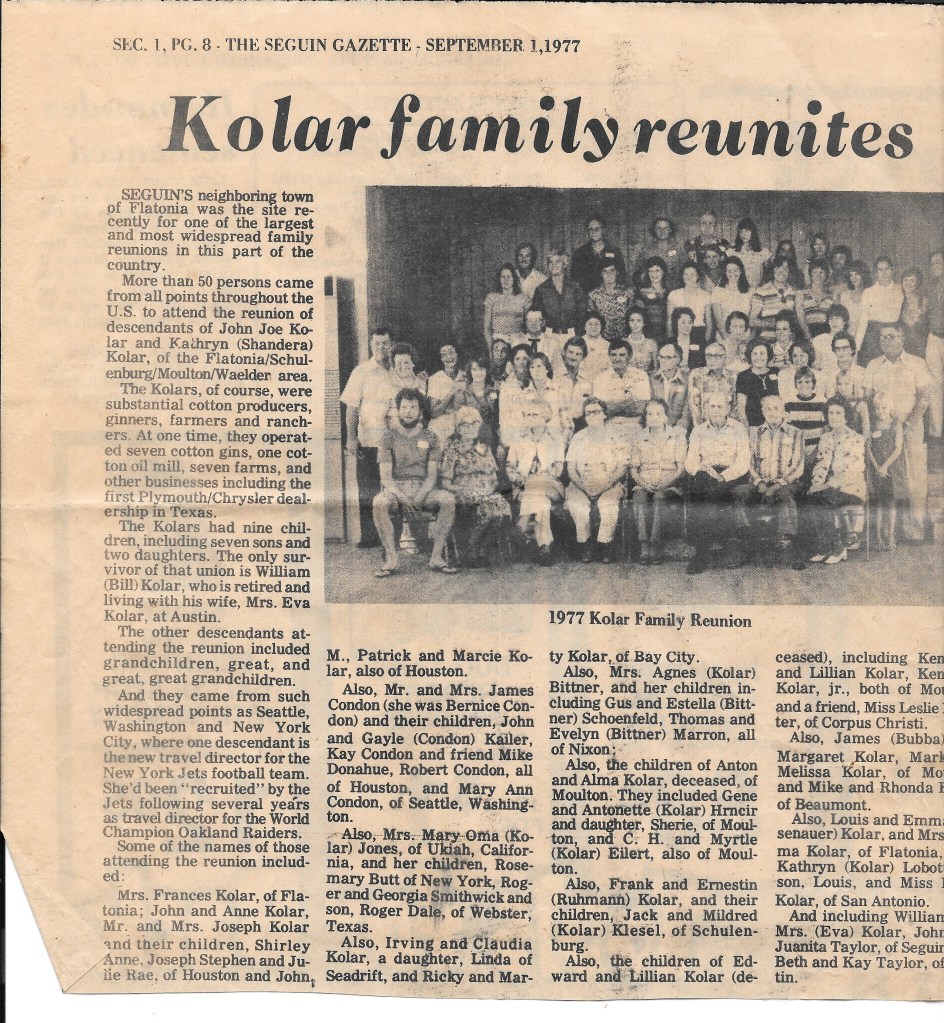
I recently learned (in 2021) from an old article published in 1977, that my step-grandfather’s family owned the very first Chrysler/Buick dealership in the state of Texas. Was this it? It had one brand new car inside the building and a row of cars across the highway in front of the railroad tracks. They say the first dealerships were located around farmers, so I suppose this IS the first dealership and my siblings and I never knew this about our Papa.
I also discovered, from the same article, that my name, Kathryn, is spelled the same as his mother. That might explain more of the reason that he was so fond of me. I wonder why no one ever informed me that I was her namesake, but they’re all gone now and there is no one to ask so I will never know for sure. It seems my step-grandfather and my parents stopped liking each other early on in the relationship.
One more bit of information that I’d never known is that his family had been in the cotton industry and in fact owned a chain of cotton gins back in their day.
Papa owned a large piece of property in Waelder, about the size of a city block. It consisted of the house, the junk yard, my Grandma Mimi’s 1/2 acre vegetable garden, the pig pen, the chicken coop, a small sheep pasture with a little creek running through, deep enough for crawdad fishing, an old, abandoned cotton gin and some slaughtering grounds out behind the garage.
Papa kept a brand new shiny car in the middle of a great big showroom with gleaming black and white tiled floors.
There was nothing else in the showroom except for calendars of pretty ladies on the walls and the coke machine. Back in the early 1950’s, Coca Cola was the only choice in the Coca Cola machine. To make your coins go down the hatch you had to pull firmly down on the lever. The tops did not twist off and the only way to open the bottle was to pry the lid off with a metal bottle opener. There was a bottle opener provided on every machine.
The coke bottles were short and stocky, made from thick glass which kept the coke so cold that there were ice particles floating around in the neck of the bottle. Chewing those sweet pieces of frozen coke was the best part of the drink.

Please note the bottle opener on the machine and the metal lever. 
<div id="flatonia"><< Flatonia and the Blue Ring >>></div>
I loved it whenever I’d hear my Papa yelling, “Time to go to the feed store today! We’ve got to go to Flatonia!” Papa had a hearing problem so he always yelled when he talked.
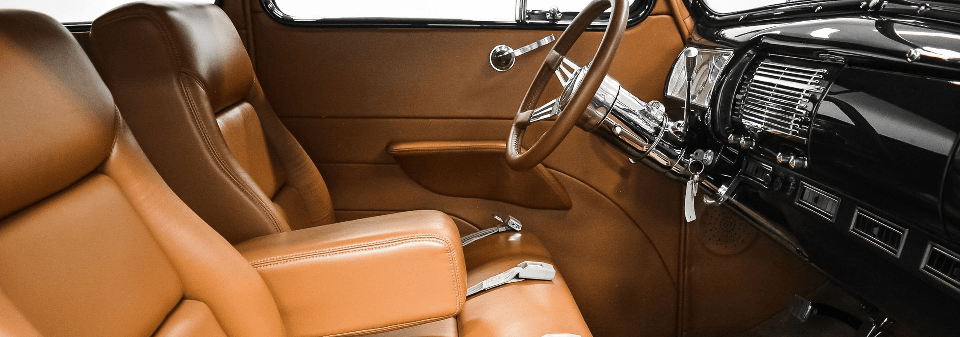
Whenever I rode with my Papa , I got to ride on top of the pull-down cushion that was in the middle of the front seat, meant to be an armrest. Seat belts had not been invented yet so children were allowed to sit there. That way I could put my tiny little arm around Papa ‘s neck and hold on if I needed stability.
Flatonia was the nearest town around with a feed store. Papa ‘s town had nothing but his gas station and a tiny matchbox of a store that could only fit two people at a time in it.
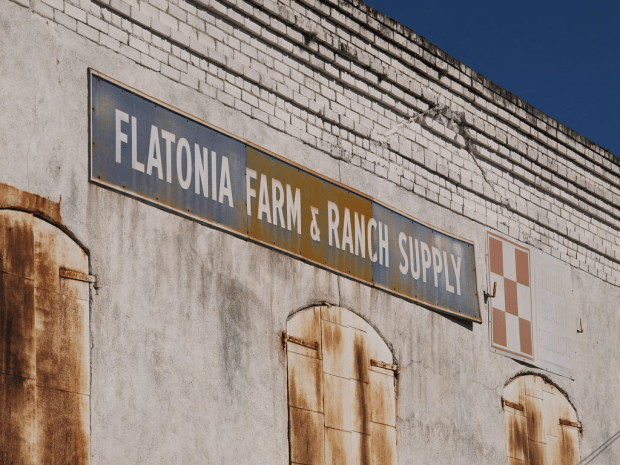
The feed store had no toys except for tiny little stuffed dead chickens that made my hair stand on end to look at. With my choices being next to nothing, my favorite item in the store was the gum ball machine. My grandfather didn’t even have one of those in his filling station. On one visit I hit the jackpot when a beautiful sapphire ring came rolling out and into my hands. It was my birthstone, a sparkling, dazzling bright blue plastic stone.
The ring was huge, both the plastic stone and the ring itself, made for an adult, not a four year old child. So, sure enough, the ring slipped off of my skinny little finger while I was standing on the side of the highway and my grandfather had disappeared momentarily. I watched helplessly as it sunk down and disappeared into the tall weeds. I was very upset. My grandfather searched for it, on his hands and knees, for quite a while as I sobbed. He must have loved me an awful lot. He said he’d get me another one just like it but he never did. I feared at the time I’d never see a ring like that again and I was right. But in the end, it wasn’t about the ring, it was about the love he made me feel, and it left an enduring memory of being cared for, despite other acts that may have caused devastation decades later.

Papa had calendars on the walls of every room of his motor company, with pictures of barely dressed women with big round breasts, tiny waist lines and bun shaped bottoms. I looked at them with awe and hoped I would grow up to look like them one day.
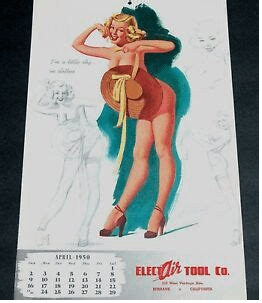

image from polybull.com 

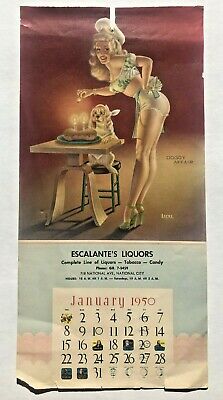
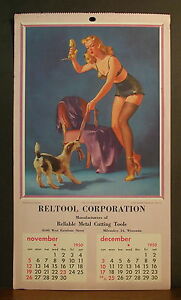

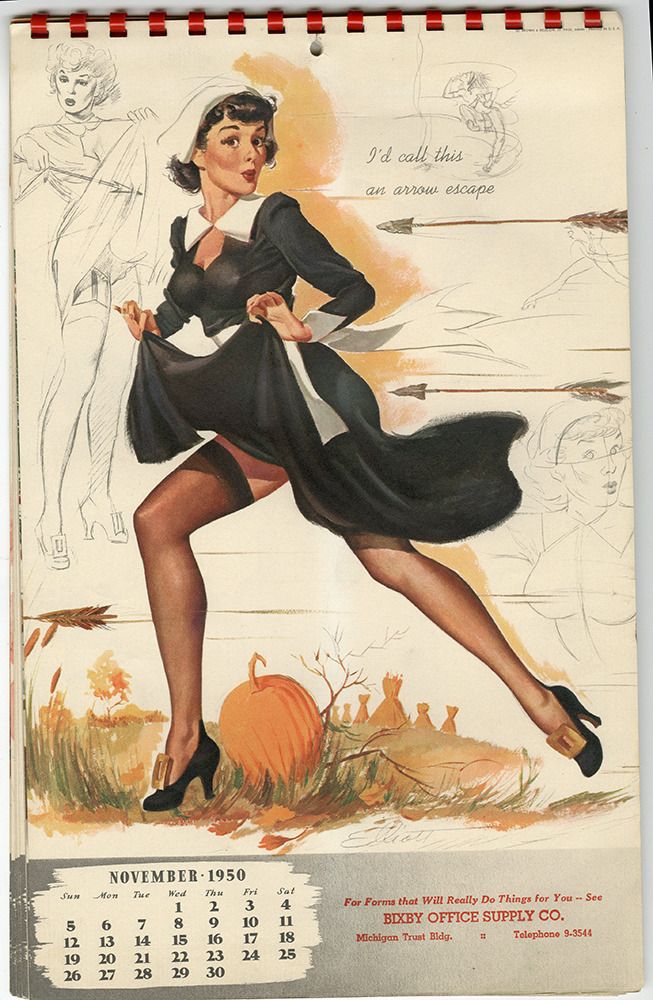

Across the highway from the filling station was a row of used cars that he also sold, and behind that row of used cars were the railroad tracks that connected my grandparents’ home to all the other towns in my life, to my other grandmother’s house in Luling, to my house in Seguin and to what I thought was the most exciting city a person could ever visit, San Antonio, Texas.

I visited the old homestead of my grandparents, almost 20 years since my childhood, in 1977, long after my grandfather had abandoned his business and moved to the city of Austin to open a Texaco Station. He was being sued at the time of my 1977 visit, by the small town of Waelder, for leaving his properties abandoned. His cars by the railroad tracks had trees growing up through the engines. The floors of the second floor on the house had sunk down to the bottom floor. The structure was no longer safe.
I visited in 1977 hoping I could restore the old homestead but it seemed way too much for me.

As shabby as this picture looks, just looking at it helps me remember walking through that door to my grandmother’s fresh baked rolls, homemade dinners and fresh brewed tea, hot steamy baths in the big claw-foot tub and climbing the stairs to watch my grandfather shave. The stairs were steep and narrow. It gave me claustrophobia when my grandfather walked too slow and I followed from behind. There was an overwhelming bad odor coming from the black rubber on the stairwell but it was worth it because I loved to watch my grandfather lather up his shaving cream, swirling the brush, made from animal fur, round and round on the shaving soap bar until it worked up a thick, lathery foam.
<<*>>>
The door on the left of the building was to my grandfather’s office where I felt secure and comforted just watching him quietly work on his bookkeeping beneath a pale circle of light.
The door to the right of the building lead to the repair shop and it’s the reason I grew up loving the smell of automobile grease and gasoline. It never occurred to me until recently that it’s the reason I liked working on my own cars.
In fact, I enrolled in Austin Community College auto mechanics school back in 1977, the very same time that I took this picture. The NASA job ended and I moved to Austin to be near my sister again, who was recovering in a halfway house, when I applied to the school for mechanics. The dean for the school of mechanics interviewed me and said that he’d never had a woman apply before but he didn’t see any reason not to accept me, so I was accepted as easy as that. By then I’d been working on my own car for almost a decade, tuning it up, changing the oil, rebuilding the carburetor, putting on tire chains, changing tires. I was about to begin that course of study when my sister died suddenly and everything in my world changed.
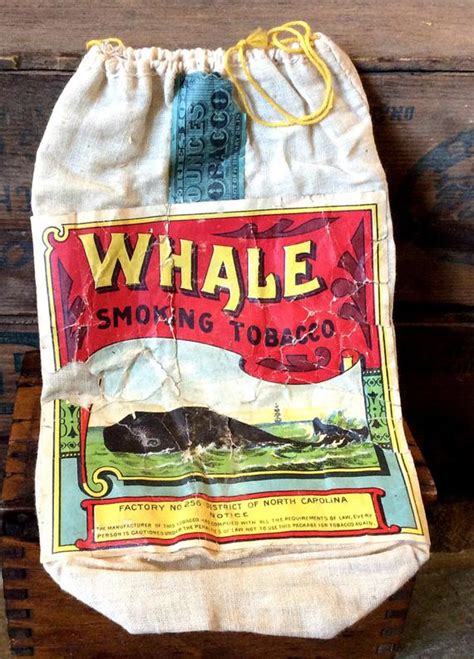
To the left of the Kolar Motor building was an old junkyard where my little brother and I used to love playing in the old wrecked cars, pretending to drive them, standing on top of them, climbing all over them and exploring, pretending they were boats, scooping up handfuls of shattered glass and shoving them into our pockets, filling up discarded cloth tobacco bags with our pretend diamonds. And then one day something made us aware that bodies had been smashed and lives ended in these cars and we lost all interest in playing in the junk yard.
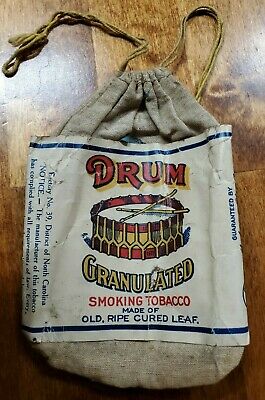
On the other side of the junk yard was my grandparent’s house, a two story wood frame home with a very large screen porch on the top floor. We all slept together on that screen porch, in large, soft beds that had been shoved together, covered in big fluffy home-made goose down comforters. At night the gentle breezes brought a welcome coolness to a house with no air conditioning. But there was nothing to stop the deafening and terrifying sound of the trains as they came roaring past every hour or so throughout the night.
The trains’ nightly intrusions brought on an emotional mix. It began with a promise, a hope, as I heard the lonely, repetitive ding of the cross street bell, warning there may be a train approaching. Sometimes there wasn’t and it was a false alarm. My anticipation would grow when I heard the first faint sounds of the approaching train, until it gave way to a gripping fear because the sound became so deafening I thought I was going to be crushed. As the sound of the train’s cry faded into the distance, the fear would dissipate and be replaced by a sad sense of longing.
In my grandparents’ house, there were guns all over the place, laying on the floor in the middle of the room sometimes. There was a gun under every bed. “Don’t touch the guns!” someone must have warned me hundreds of times, which may be why I’ve had a phobia about being around guns my entire life.
Every night, while sleeping on that upstairs screened porch, just across the highway from the railroad tracks, I would lay beneath the covers, listening to my grandmother’s frail and shaky voice waking my grandfather from a peaceful night’s sleep, “Bill, Bill, I hear something outside. I think someone’s out there.”.
“Oh, Goddamn it, Eva, It’s nothing. Now go back to sleep.” Papa would bark at her. But she would prod and prod until he’d finally sit up, throw his legs over the side of the bed, grab a gun, lean against the screen and begin to threaten the empty darkness that he had a gun and would use it. “Alright, I hear ya out there. You better be on your way, cuz I gotta gun and I’m gonna use it!”
My grandmother had peach trees all over her front yard by the side of the highway and she had tied ribbons and strings from branch to branch, attaching little bells here and there to serve as alarms, in case someone tried to steal her peaches. And she was convinced that someone did steal them almost every night. She hung a sign among the strings in the middle of her orchard that read, “We know who you are and the police know who you are. So, be on your way or we will help you on your way.”
My grandmother used to tell us violent stories. She carried knives and diamonds in her bra and guns in her purse.
She also made fresh homemade rolls every day. I can’t believe I never asked her how to do it, or watched her closely enough to learn. On her kitchen counter there was always a mound of fresh made dough, lying on a thick blanket of flour, and covered with a tea cloth. I was in my late 30s and she was in her eighties when I found myself watching her in amazement as she worked with her big pillow of dough, swirling it around in a cloud of flour, as skillfully as she had done in my childhood. Her rolls that day were just as they had been for the past 30 years, steamy hot, fresh and light.
Grandma Mimi could also, in her eighties, still bend over, squat down and weed her large vegetable garden with no seeming stiffness and no complaint. She was, scarily, almost in better physical shape than I was. The same could not be said for her mental condition. I’m certain she suffered from schizophrenia for most of her life, although un-diagnosed.
My grandfather was not my real grandfather. He married my grandmother the year that I was born and he adored me the first few years of my life. He had no children, so he treated me like his firstborn. Once I’d lost my cuteness, his attention waned however and I was replaced by younger sisters, which was fine with me, because I’d kind of outgrown the need to be coddled so much. I also began to learn that he was a cruel man. When my two little sisters would visit him, I was told, he would compare their kisses and tell the younger sister that her kisses were sweet and tell Marilyn that hers were sour, in an attempt to pit two sisters against each other at a very young and undeserving age. They were only two years apart. I can only imagine what he might have done to my sister and I when we were younger. I have no memory of it so I won’t accuse him, but I’ve always wondered why she’s tortured me all of her life.
<< * Mimi’s illness *>>
My grandmother worked as a nurse from the 30’s through the 70s. She was a struggling single mother for all of my father’s childhood, only marrying again after my Dad had a family of his own. She raised him with no child support or family support, all on her own, and I’d like to respect her for that but she did so many mean things it’s difficult to look at the balance when you weigh the good and the bad. We are all wounded and broken. I don’t know when it happened to her, but it did.
What she did to sabotage the day nurse who she shared a job with was horrifying, and I don’t know why I feel compelled to share it except that I believe it’s a part of the human history that gets swept under the rug. And when things like this are swept under the rug, innocent people are hurt. Rinsing his drinking glass out in the old man’s urine and then putting it back in the cabinet. Yikes! This was my grandmother and she bragged about it! She was convinced that the day nurse had been giving her drinking glass to the “n-word” who worked in the yard and this was her form of revenge. She was racist, delusional, crazy and dangerous. I was not having a good awakening as a child in many respects.
<<*>>>*<<<*>> Kay Z. Enters my Life <<*>>>*<<<*>>
By the time I was ten I was a little unenthusiastic about visiting the grandparents and I complained to my mother when it was time for the summer visit to their home. She suggested I bring a friend, so we went down the list of friends and invited all the typical ones we could think of, Karen A., Lala S., a couple of others. No one could go, or wanted to go and I was ready to give up in exasperation when my mother suggested Kay Z. I barely knew her, I said. She wasn’t going to want to go with me, I whined. But my mother insisted, so, I picked up the phone one more time.
“Hello, Kay Z?”
“Yes.”
“This is Kay T. Would you like to go to my grandparent’s house in Waelder with me?”
I hear a loud bang, and then a silence. She has dropped the phone, I realize.
More Silence.
Then I think I hear a distant screaming. I become sure of it when the screaming gets louder, but then it fades away again. I hear the screams get louder again as she makes a second run around her house, down the halls and back again. She is excited and squealing in joy.
For the next two years I have the time of my life with this vivacious girl made of pure exuberance and courage and joy. She lead me into many unknown and unplanned adventures with a fearless spirit. We explored every creek and vacant lot in the town of Seguin not to mention the many special places at my grandparent’s farm.
We lay on top of gravel hills beside the railroad tracks as the thundering trains roared by. We would scream at the top of our lungs just to delight in the wonder of not being able to hear our own voices, deafened by the sound of the train. We would look at each other screaming soundlessly and laugh, rolling around in the gravel while the train’s screeching metal wheels smashed our pennies and bobby pins into thin, shiny, oddly shaped pieces of metal.
We stayed away from our grandmother’s vegetable garden, because of the copperheads, despite it’s temptations, being the size of a small town block.
But no one told us to stay away from the old abandoned cotton gin that stood at the very back of Papa’s property.. . It’s with Kay that I finally found the courage to explore that mysterious part of Papa’s land.
The cotton gin was a large cavernous structure that had been abandoned long before I got there, with ladders that led to the rooftop, and huge broken shafts and spindles, leaning against walls, wedged so firm we could climb upon them. There was something haunting and spooky about the place and I don’t recall wanting to return after a few explorations. But it wasn’t until I was sitting in my college history class, 35 years later, that it dawned on me what all of that property of my grandfather’s represented. And sure enough, when I looked it up on the internet, the Kolar family was in the cotton gin business from earliest days, which means there were slaves in the history.
<<*>> My first best friend, circa 1956 <<*>>
And I thought of a young black boy I used to play with back there on the farm, before the time of Kay Z, when I was much younger. When I saw that he loved to go barefoot like me I thought I had found my own soulmate. It never occurred to me, until decades later, that he probably went barefoot because he was shoe-less. Jesse was my primary playmate when I went to my grandparents’ house, the first few visits that I remember. He and I stayed within the perimeters of the immediate, fenced in back yard, climbing every tree and exploring every plant and animal, while his mother worked inside and outside the house.
One day my grandmother took me over to his house, to pick up some new bantam hens to add to her brood. When we entered Jesse’s neighborhood, driving up and down the tiny dirt hills speckled with cute little shacks here and there, chickens running wild and vegetable plants spilling over rickety fences, I thought I was driving through a story book and was charmed.
I was so excited by the time we arrived at the shack that she told me was Jesse’s house, I went bounding out of the car and up to the shack, bursting through the door to discover at least a dozen black people, standing there and looking terrified, in this dark and sparsely furnished shed. There were beams of light shining from behind the group of frightened souls, lights coming through the wide spaces between the boards of the wooden shed. I could see the outdoors, the grass and trees, from behind them. There was nothing else in the shed. Just the people standing there, looking scared and defenseless, and maybe a table It wasn’t the kind of a home I’d ever seen before.
I stood at the doorway, looking at them, mouth gaping open, frozen in shock. I felt I’d committed a terrible crime, or rather, thrown back the curtains and exposed one. This is all that I remember. I don’t recall a single thing after that initial moment of shock. I don’t recall ever seeing that house, the neighborhood or my friend ever again, after that experience, and sometimes I still wonder about him. He would be in his 70s now.
<<*>> Slave Row <<*>>
On the western side street that bounded Papa’s property was a row of tiny sheds that always intrigued me as a child and I’d try to peer inside of the tiny sheds whenever we drove by. Some of them were occupied, with black people sitting on the porch. And I wondered how they could fit themselves and their entire lives into those tiny boxes on the side of the road.
I finally realized, also decades later in a college history class, that what I’d been looking at in my childhood was the the remnants of slave row. There it was, one hundred years after slavery, and black people were still living in those tiny little sheds. While visiting the grandmother’s house, I’d been walking and playing on the very grounds where slaves were once used for their labor, and beaten, and worse.
Both he and my grandmother used the n-word profusely, make no mistake that they were racist to the core. And yet they depended on their labors and products. It was a contradictory world to be living in, not to mention exploitative and hypocritical.
In the end, no one ever robbed or harmed my grandparents. But their gun, which was meant to protect them, took my little sister’s life instead, and a big chunk of mine and several others. Marilyn had succumbed to schizophrenia and she thought that aliens had created an after life and all her loved ones were already there, replaced on this earth by impostors, so she put a gun in her mouth to go and join her real family. She thought she was being told to do it. That’s what I call love.
“She was messed up anyway.” An old friend said just after her death.
“Her death was for the best. “ My step-sister said in an effort to comfort.
Just as she had been neglected in life, so she was neglected in death as her notes lay in a box, unread for 40+ years. I can’t begin to explain the depth and length of crying that came with this discovery of her final suicide notes. She did it to be with us. And none of us ever knew it.
………………………
This was supposed to be about my old best friend, Kay. About her later…
Papa went to the police station and demanded the gun back just a couple of days after Marilyn died and I never got over that. I always wanted to get my hands on that gun so I could melt it down. I still do. I never found it. They say it’s still in the family somewhere. The only thing I ever asked from the family, literally, was that they destroy that gun… And getting rid of every gun in the family would be an added benefit, but I never demanded that, just suggested it. You never know what might happen with your gun one day. You may have a Marilyn. It was not worth it. Not a single one of the dozens of Taylor guns every protected anyone … instead it devastated an entire family, for generations.
Papa asked me to visit shortly after Marilyn’s death, and I declined without giving a reason. “But why?” Papa asked. I wanted to say ‘because I was told my sister lay in a pool of blood on your kitchen floor, gasping for her last breaths of air, with her brains splattered all over your ceiling’, but I didn’t, of course. I didn’t want to hurt Papa. I hadn’t heard yet that he had gone and gotten the gun back. It devastated me when I did hear of it.
So, I don’t remember what I said to PaPa when he pleaded with me to come over. I only remember his response when he realized it was because of Marilyn that I could not visit his home, “Oh that! Oh that kinda thing happens all the time. Why just the other day a young man jumped off the Congress St. bridge and killed himself,” he said. I wanted to love my grandparents and I still do in a modified way. But, sometimes it is difficult in a person’s life to do so, and most people don’t often know another’s pains. He called her “that”.
Fortunately, I was moving to New Mexico where I wouldn’t see my Papa again for many years, because I found his indifference to my little sister’s death difficult to forgive. And the same with my grandmother, “You children are making your daddy grieve for too long.” she said to us as we sat in the car at Marilyn’s grave a couple of weeks after her death, while Dad got out ahead of us. It was she who had left the gun out on the kitchen counter and then sent Marilyn in to go slice a tomato. She never voiced any regret. No one voiced any blame. They said it had a hairpin trigger. A large gun with a white handle. I remember it well. I’d seen it laying around the house all of my life. I’ve never seen it since but they say it is still around. The fact that I wanted the family to be rid of it is what caused the original rift that would turn into a permanent tear.
))((*)) Austin Texaco ((*))((
By the time I took this photo, Papa owned a Texaco Station in Austin and the only remnants he had left from his Kolar Motor Company were the calendars, which now hung on the walls of his Austin Texaco. To me they were a reminder of sweeter and simpler times. My grandparents had become sour after moving to Austin, or maybe I was just more aware of it, because by then I was in my teens.
Credit cards were a new phenomena and Papa wasn’t happy with it, so he’d run around from gas pump to gas pump yelling at customers, “Cash customers first!! Cash customers first!!” Some people would get angry and drive away. One day a man grew impatient, got out and tried to pump his own gas. Self-serve stations weren’t in existence yet so this was unheard of. Like all gas station attendants, Papa wore a starched Texaco uniform and no one was allowed to touch the pumps except the attendant. Papa told us that he ran into the station and got his gun but by the time he got back outside the impatient customer had driven away. My heart stopped when I realized that my crazy grandfather had almost killed someone. I am just very grateful that it never happened. But then again, it did.
My grandmother had, by the time of my teens, now taken to hanging out the window of her Austin home and calling into the darkness that she had a gun and would use it. She, again, had peach trees, embellished with strings, bells and signs in her Austin orchard.
Mimi described to me how she played chicken with her car and a teenage neighbor girl who she felt was walking too far into the road. “I didn’t move over for her one inch.” she boasted. I feared for many reasons that my grandparents might one day hurt someone. For some reason it never occurred to me it would be someone in my very own family. Word of warning to anyone in a similar situation.
A new sign was on their front door, made from cardboard and written with magic marker:
“If you are too yellow, or too red, to fight for this country, then be on your way or we will help you on your way.” It was the Viet Nam war.
I guess I always blamed them for making the gun available but never said that to them, of course, and I don’t believe they’re the only ones who enabled this to happen, not by a long shot. I’m convinced that all of us who were older than Marilyn bear blame in some form or other. In more than one way, each of us let her down, but none of us ever discussed her again. I tried…. once …. I found a letter I wrote as evidence that I tried. Doesn’t matter. Everyone deals with loss and failure in the way that they choose. This is my way.
You can’t say I wasn’t forgiving because shortly after Marilyn’s death I took my grandmother on a cross-Texas trip, at the request of my father. Dad needed a break from her and begged me to take her, so I took her to visit my sister, Nancy and her two young children, some 300 miles north of us, in Stephenville, Texas and to Aunt Maudie’s house, a couple hundred miles back south.
<<<Taking this long road trip alone, with my delusional grandmother, after having just been hollowed out by the loss of my little sister and being three weeks pregnant, was no picnic for me.>>>
So I was looking forward to making contact with another sane person when I pulled in front of Aunt Maudi’s country home. I’d never really known her, or anything about her. But, within minutes of walking in, I realized Maudie was as mental as my grandmother. So I sat in her darkened living room, with every single ray of outdoor light blocked out by her thick, black, heavy, oversized curtains, secured with cowbells tied to thick ropes, and I detached from the two sisters’ paranoid conversation, letting my thoughts wander.
I suddenly recalled the only other time I’d been to Uncle Joe and Aunt Maudie’s house. We were very young and they tried to force us to take a nap in the back bedroom. I suppose we weren’t cooperating because Aunt Maudie opened the door and said if we didn’t get quiet that Uncle Joe was going to come in and shoot us all. I looked up and saw the profile of my Uncle Joe sitting in his big chair in the living room, loading up his shotgun. So I lay in the bed, frozen and quiet, eyes squeezed shut, pretending to be asleep, trying not to breathe, waiting to be killed. For some reason, he never came in. And that is why I’m here today to write these stories.
<<<***>>>
<<<***>>>
<<<***>>>
The last time I saw Papa, I’m happy to say that we did have a final bonding moment. We were sitting in my father’s living room. Papa had long ago resigned himself from the family and usually sat around never offering a word at the family gatherings, and I, by that time, had been fairly well crushed by a harsh life, so I sat around silent as well. So, as Papa and I sat alone in the living room, watching my step-mother disappear down the hall, after having berated someone for something or other, my Papa said suddenly, “I hate that bitch.”
Some people in our lives hurt us without intending to. Those are the easy ones to forgive. Others will do it with full intention. How to handle that in a healthy way is not for me to say, because I’ve not learned how myself. At the present I’m thinking that I should have had more courage in my life ….
Here is the article that I just found again yesterday. It was in the box with Marilyn’s things, not tampered with for 40 years. This is where I discovered three new things about my grandfather. It is confirmation that his family owned several cotton gins, was in the cotton industry and owned the first Chrysler/Buick dealership in Texas.
I took my father to visit a friend, while taking care of him as he was suffering with Alzheimers. It was a man in a very nice military veteran’s retirement home, close to the Southeastern coastline of Texas. Dad didn’t really remember who he was but he told me how all the single ladies of Gonzales were jealous of my grandmother for winning the catch of the generation, the bachelor that all the local woman sought. He said that my Papa was quite the playboy and danced up a storm at the parties with all of the ladies, until he met my grandmother.
My Mimi never told me that story. I only remember once even thinking about her younger years as she began telling me that she used to have quite the stunning bust line, which I considered skeptically as I watched her scoop up the noodles hanging down to her knees into the cotton cups of her bra.
 Oikos
Oikos 